Recipes · breakfast, snack
Banana with Peanut Butter: First Peanut for Babies (6+ Months)
How to safely offer your baby peanut for the first time: a teaspoon of smooth peanut butter thinned with warm water and stirred into mashed banana.
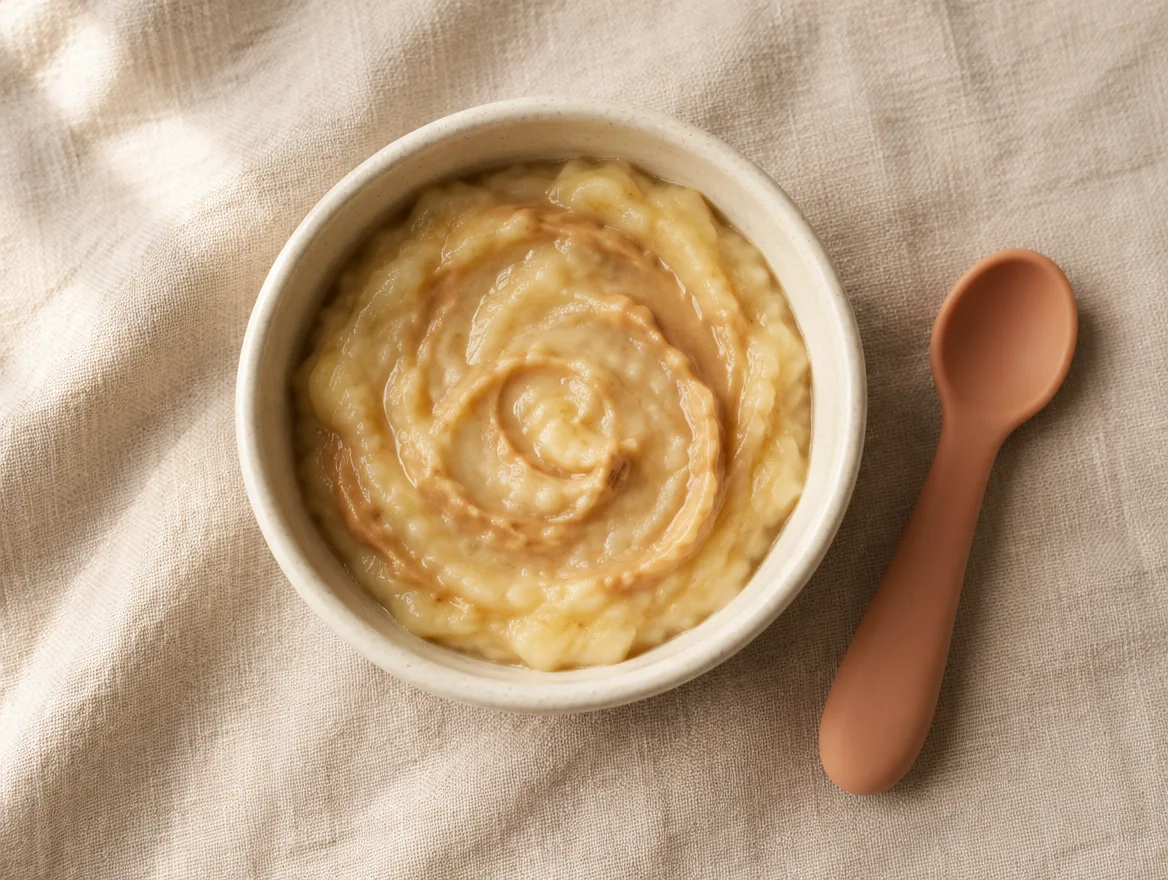
Illustration of the dish created with the help of AI.
- For babies from 6 months
- Prep 5 min · cook 0 min
- Very easy
- 1 baby portion
Allergens
- Peanutpeanuts and peanut products
Free from egg, dairy, gluten.
If you thin the peanut butter with formula instead of water, the dish also contains milk. Peanut butter may contain traces of tree nuts, so check the label.
Ingredients
- half a ripe banana
- 1 level tsp smooth peanut butter (100% peanuts, nothing added)
- 2 to 3 tsp warm water or breast milk
Method
- 1Stir the peanut butter in the jar, because the oil separates on top. Put a level teaspoon in a small bowl.
- 2Add the warm water, a teaspoon at a time, and stir until you have a thin, smooth sauce that runs off the spoon.
- 3Mash the banana with a fork until no lumps are left.
- 4Stir the thinned peanut butter into the banana. The mixture must slide easily off the spoon. If it's sticky, add a little more water.
- 5Offer it on a spoon. The first time, give only as much as fits on the tip of a teaspoon, wait about ten minutes and carry on slowly if there's no reaction.
Nutrition per 100 g
- Energy
- 105 kcal
- Protein
- 2.3 g
- Fat
- 3.7 g
- Carbohydrate
- 18.2 g
- Fiber
- 2.2 g
- Iron
- 0.3 mg
- Calcium
- 8 mg
Approximate, calculated from the raw ingredients using USDA FoodData Central. Actual values depend on your ingredients and how you cook them.
Rate this recipe
Click a star, or choose one with the arrow keys and press Enter.
Why peanut so early
Guidelines now recommend introducing peanut in the first months of solids, because early and regular introduction lowers the risk of peanut allergy. Offer it for the first time at home, in the morning, when your baby is well, in a small amount. Stay with your baby for the first two hours, then watch them for the next 2 to 3 days; if your baby has severe eczema or a known food allergy, talk to your pediatrician or GP first. Once your baby tolerates it well, keep offering it regularly.
Safety
Never give a baby whole peanuts, pieces of peanut or a spoonful of thick peanut butter, because they can get stuck in the throat. Always thin peanut butter in food or liquid. Choose smooth peanut butter made only from peanuts. If you see a rash, swelling of the lips or face, vomiting or difficulty breathing, get medical help immediately.
Adapting it by age
- From 6 months: thinned into banana puree, on a spoon.
- From 9 months: a very thin layer spread on a finger of soft bread, which contains gluten.
- From 12 months: a teaspoon stirred into porridge or yogurt. Still no whole peanuts.
Safe feeding
Always feed your baby sitting upright and never leave them alone while eating. Offer a new food in the morning or early afternoon and watch for a reaction over the next two to three days. Before 12 months, add no salt, sugar or honey. Food is best eaten straight away; if any is left, cool it quickly, keep it in the fridge until the next day at the latest, and throw away anything left in your baby's bowl. This recipe is for information and doesn't replace advice from your pediatrician or health visitor, especially if your baby has a food allergy or severe eczema.
How to tell gagging from choking and when to introduce allergens: Starting Solids: When to Begin and How to Know Your Baby Is Ready.
Keep track of what your baby tries
In the HannaH app you log every new food, the texture, how much your baby ate and how it went down. If a rash appears, you can show your pediatrician an exact list instead of trying to remember.
More meals for babies from 6 months
How many meals a day and a sample week: Baby Food for a 6 Month Old: First Foods, Menu and Recipes